Giraffe Financial and the Appalachian Solar Finance Fund are helping nonprofits and public organizations navigate federal incentives, reduce energy expenses, and invest more resources in their communities.
For many nonprofits, schools, and local governments, the value of solar is straightforward: Lowering monthly energy costs can free up money for services, programs, and other community priorities. Accessing the financial incentives that make a solar project affordable, however, can be far more complicated.
That is where Giraffe Financial’s partnership with the Appalachian Solar Finance Fund (SFF) comes in. For the past year and a half, the two organizations have worked together to help institutions across Central Appalachia understand federal tax credit requirements and receive the incentives available to them.
“Central Appalachia has a real project pipeline and real appetite for solar, but a lot of the organizations there don’t have in-house tax expertise to navigate [federal incentives] on their own”
Founded in 2023, Giraffe Financial is a national tax credit platform and advisory firm specializing in federal incentives for solar and other energy projects. Its services include determining project eligibility, calculating credits, reviewing labor and domestic-content requirements, completing IRS pre-filing registration, and preparing required tax forms.
The partnership also has a personal connection to the region. Prince lives in rural West Virginia and is particularly motivated to bring the financial benefits of solar to Appalachian communities.
Opening Federal Incentives to Tax-Exempt Organizations

One of the most important tools available to nonprofits and public organizations is Elective Pay, also known as direct pay. The program allows eligible tax-exempt organizations to receive the value of certain federal energy tax credits as a direct payment from the IRS.
“Elective Pay lets tax-exempt organizations, like school districts, nonprofits, and municipalities, receive the same federal tax credit value for solar and battery storage projects that a taxable/private company would get, even though they do not pay income tax or file an income tax return,” said Prince.
That opportunity can make it more practical for an organization to own its solar installation instead of relying on a third-party company to own the system and claim the tax credits. “Instead of relying on a third-party owner to claim the credit and share back a portion of the savings, the organization can own the project directly and get cash payment from the IRS for the credit’s full value,” Prince said.
Elective Pay can also support projects that combine solar panels with battery storage. In addition to helping an organization manage its energy costs, batteries can provide emergency power during grid outages and increase the value of the overall investment.
Turning a Complex Process Into a Manageable One
While Elective Pay expands access to federal tax incentives, claiming those incentives requires careful preparation. Many Elective Pay-eligible organizations have never filed a federal income tax return and do not employ staff members with specialized tax expertise.
“The biggest challenge is usually that these organizations have never filed a federal tax return before, and Elective Pay requires them to file one, sometimes for the first time in the organization’s history,” Prince said.
Organizations must also complete an IRS pre-filing registration process and document that their projects meet current eligibility requirements. An incorrect registration number, incomplete documentation, or a missed deadline can delay a payment or potentially affect eligibility. Giraffe works with SFF-supported organizations to manage those details from the beginning of a project through filing.
“We handle the eligibility analysis, the credit calculations, the prevailing wage documentation, the pre-filing registration, and the actual tax return preparation and filing, so the organization doesn’t have to become tax experts to get the benefit they’re entitled to,” Prince said.
SFF brings regional relationships and knowledge of the local project landscape. Giraffe contributes specialized tax and compliance expertise. Together, the organizations can identify potential issues early and help clients move forward with greater confidence.
“Partnering with SFF has been a great example of what happens when a regional network and a specialized compliance partner work together instead of separately,” Prince said.
More Money for Mission-Driven Work
Huntington City Mission in Huntington, West Virginia, illustrates what that partnership can accomplish. The nonprofit provides shelter and support to people in need.
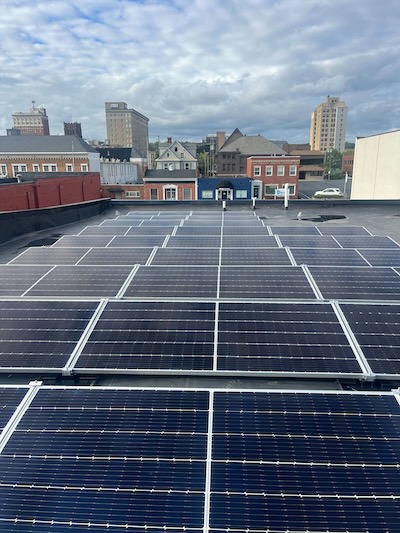
With assistance from SFF and Giraffe Financial, the organization navigated the tax credit process for a solar installation spanning five of its buildings. According to Prince, the project reduced the mission’s electric bill by approximately 45 percent.
“Every dollar they save on utilities goes back into their mission,” Prince said. “That’s what makes this work meaningful to us; it’s not abstract, it’s an organization directly serving people having more resources to do it.”
The Huntington City Mission project is not an isolated example. At least six additional SFF-supported projects in Kentucky, Ohio, Virginia and West Virginia are currently in Giraffe’s pipeline.
“Six more projects in the pipeline across four states tells me this isn’t a one-off success story; it’s a pattern,” Prince said.
Schools, churches, nonprofits, and local governments throughout Appalachia face significant energy costs. Many have available roof or land space for solar, and some projects may qualify for additional federal incentives based on their location and other qualifying factors. “What’s been missing isn’t interest, it’s access,” Prince said. “Seeing project after project move through the pipeline in Kentucky, Ohio, Virginia, and West Virginia demonstrates that once you remove the tax complexity as a barrier, the demand is already there.”
Asking the Right Questions
Federal tax credit requirements continue to evolve, making it important for organizations to seek clear, documented information from installers, accountants, and other project partners.
“Ask specific questions, not general ones,” Prince said. “Ask your installer to document in writing how the project meets current start-of-construction and safe harbor timelines, since those rules have shifted. Ask where major equipment comes from, since sourcing now affects eligibility under new foreign entity restrictions.”
Organizations should also determine who will be responsible for monitoring compliance throughout the project.
“The rules are changing quickly, so the real question isn’t just whether you’re eligible; it’s who’s accountable for keeping the project compliant as things evolve,” Prince said.
For organizations feeling overwhelmed by the process, Prince’s message is simple: Complexity should not prevent you from exploring a project that could deliver long-term savings.
“The intimidation is understandable, but it shouldn’t be the reason a project doesn’t happen,” Prince said. “If you’re a school, library, local government, or nonprofit that’s been paying a power bill every month for years, it’s worth taking the time to find out if solar could lower that bill for the next 20 years.”
Ready to Start Your Project?
At the SFF, we specialize in working with nonprofits, local governments, schools, and small businesses to provide expert consulting and tailored financing solutions to help turn the solar project of your dreams into reality. Whether you’re just beginning to explore your options or need help arranging the final pieces of the puzzle, we’re here to guide you every step of the way.
Contact us today to learn how we can help your institution unlock new economic opportunities and long-term savings.